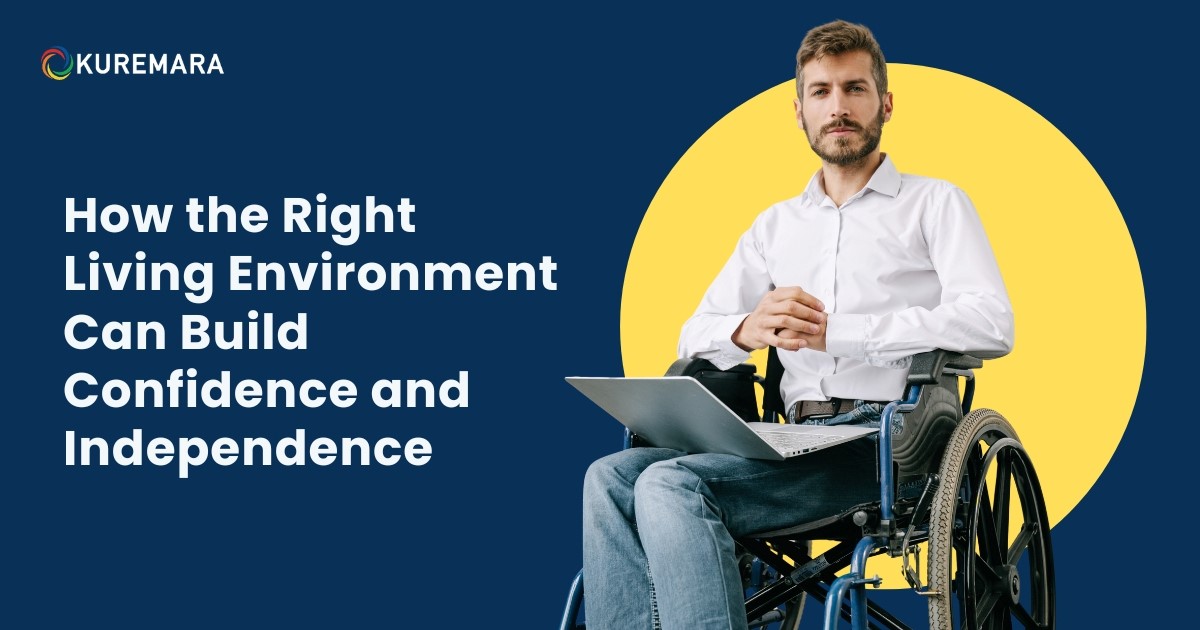
How the Right Living Environment Can Build Confidence and Independence
Moving into a supported living arrangement is a significant step for many participants and families. It often comes with a mix of emotions excitement, uncertainty, hope, and sometimes concern about whether the environment will truly feel comfortable and supportive.
For participants, a home environment can influence far more than daily routines. It can affect confidence, social interaction, emotional wellbeing, and independence. The right support setup can help participants feel more in control of their lives, while the wrong environment can feel restrictive or emotionally draining.
This is why supported living should never feel like a one-size-fits-all service. Every participant has different goals, routines, personalities, and support needs. A good living arrangement recognises those differences and creates space for participants to live in a way that feels safe, stable, and empowering.
Why Supported Living Has Become So Important
Many participants want greater independence while still having access to the support they need. Supported living creates a balance between assistance and personal freedom, helping participants manage daily life more comfortably.
Families often explore SIL providers Brisbane because they want support that goes beyond basic supervision and instead focuses on helping participants build meaningful daily routines and stronger life skills.
Supported living can help participants:
- create structure and stability in daily life
- build confidence through routine and familiarity
- improve independence gradually
- strengthen social interaction and communication
- feel emotionally safer and more supported
The goal is not simply to provide accommodation. It is to help participants feel more capable and comfortable within their own environment.
The Biggest Misconception About Supported Living
One common misconception is that supported living removes independence. In reality, good supported living should do the opposite.
Strong support environments encourage participants to:
- make choices about their daily routines
- build confidence gradually
- participate in household activities
- maintain social connections
- feel involved in decisions affecting their lives
Participants usually feel more motivated when support encourages growth rather than dependence.
What Families Often Notice First
Families often notice the emotional atmosphere of a supported living environment before anything else.
Things that usually stand out include:
Consistency- Participants often feel calmer when support workers remain familiar and routines stay predictable.
Communication- Clear and respectful communication helps both participants and families feel reassured.
Comfort- A welcoming environment usually creates stronger emotional adjustment and confidence.
Flexibility- Participants benefit when support can adapt naturally to changing needs and preferences.
These factors often influence long-term satisfaction far more than brochures or facility photos.
Daily Living Is About More Than Care Tasks
Supported living involves much more than practical assistance. Daily life also includes emotional wellbeing, social connection, and confidence-building.
Pointwise, participants may receive support with:
- cooking and meal preparation
- cleaning and household routines
- medication assistance
- transport and appointments
- community participation
- personal care and hygiene
- social and recreational activities
The best providers create environments where participants feel encouraged to participate rather than simply being cared for passively.
Why Community Participation Changes the Experience
Participants often experience better emotional wellbeing when they remain connected to the community around them.
Community participation can help participants:
- develop stronger communication skills
- reduce social isolation
- build friendships and confidence
- enjoy new experiences
- create more meaningful routines
This is one reason many participants researching sil brisbane services look for providers that actively encourage social inclusion and community engagement rather than focusing only on in-home assistance.
A Look at Flexible Supported Living Services
Kuremara describes itself as a registered NDIS provider delivering disability support services across Australia, including Brisbane. According to its website, the organisation provides services such as Supported Independent Living (SIL), Individualised Living Options (ILO), Short Term Accommodation (STA), transport support, community participation, in-home care, and complex care services.
Its Brisbane SIL-related pages state that the organisation focuses on participant-centred accommodation and support arrangements designed around independence, comfort, and daily wellbeing. The website also references support environments intended to help participants build routines, maintain community connection, and improve confidence in everyday life.
The organisation further outlines accommodation opportunities across Brisbane aimed at supporting both practical daily assistance and long-term participant independence.
For participants and families exploring supported living, this positioning suggests a focus on flexibility, participant choice, and personalised support environments.
Choosing the Right Living Environment Matters
Not every supported accommodation arrangement will suit every participant. The right fit often depends on personality, routines, communication preferences, and the level of support required.
Families often consider factors such as:
- compatibility with support workers
- house environment and atmosphere
- level of participant independence encouraged
- stability of routines
- communication with carers and families
These details often determine whether the environment feels genuinely supportive long term.
Why Stability Helps Participants Thrive
Participants often build confidence slowly over time. Stable routines and familiar support environments can help people feel safer and more emotionally secure.
Long-term consistency can support:
- improved confidence in daily activities
- stronger relationships with support workers
- better emotional adjustment
- reduced stress around change
- greater comfort in social settings
This is why many families specifically search for supported independent living brisbane options that focus on long-term participant wellbeing rather than simply providing accommodation availability.
The Emotional Transition Into Supported Living
Moving into supported accommodation can feel like a major life change for participants and families alike. Even positive transitions can create nervousness at first.
Good providers usually support this transition by:
- introducing routines gradually
- building trust patiently
- maintaining calm communication
- helping participants feel included
- encouraging emotional comfort at the participant’s pace
A supportive transition process often helps participants settle more comfortably into their new environment.
Conclusion
Supported living is not only about having support available. It is about creating an environment where participants can feel safe, respected, included, and encouraged to live with greater confidence and independence.
Kuremara presents itself as a registered NDIS provider offering Supported Independent Living services across Brisbane alongside STA, ILO, transport assistance, community participation, in-home support, and complex care services. Its website highlights a participant-focused approach aimed at helping participants build routines, maintain independence, and feel more connected to everyday life.
For participants and families exploring supported living options, the right environment is often the one that feels not only supportive, but genuinely comfortable and empowering over the long term.